


 31 AUG, 2023
Launching the StartUP Lite New Business Package!
Attractive price for a secure start: Launching the StartUP Lite New Business Package! Have you dreamt of owning your own VoIP business? Well, your dream just got closer to reality! Introducing the StartUP Lite package from GoAntiFraud, designed to make your VoIP business venture smoother and more affordable than ever before. 💸 Are you ready to embark on your journey towards VoIP success? This package includes: Up to 16 channels for enhanced communication capacity. 24/7 online support for uninterrupted assistance. Tailored business setup, ensuring your unique needs are met. 2x GoIP 8 Gateway for seamless connectivity. License valid for 2 months, providing the right tools for growth. Personal support from experts in the field. Call recording feature for valuable insights. We've made it easier than ever to kickstart your VoIP business journey with our comprehensive StartUP Lite package. For a brighter future in the world of VoIP business, contact us for a pre-sales consultation and to get started!

GSM termination - basic terms and concepts
For those who start working in the field of VoIP GSM termination, we have compiled a small dictionary of basic terms and concepts to help you understand all the intricacies of working in this specific business niche. GSM - (from the name of the group Groupe Spécial Mobile, later renamed the Global System for Mobile Communications) is a global standard for digital mobile communications with time division multiplexing (TDMA) and frequency (FDMA). Developed by the European Telecommunications Standards Institute (ETSI) in the late 1980s. VoIP (Voice over Internet Protocol) or IP telephony is a technology that provides voice transmission over packet-switched IP networks, a particular case of which are the Internet, as well as other IP-based networks (for example, dedicated digital channels). To connect the Internet (IP - networks) with the public switched telephone network PSTN (span> Public Switched Telephone Network), which belongs to the global circuit switched networks, special analog VoIP gateways are used. GSM Termination (VOIP termination) is a profitable business, which is based on the principle of converting a VOIP (Voice over IP) signal into a GSM signal using a VOIP-GSM gateway, SIM box and transferring a call to the end subscriber. Voice traffic is telephone calls to certain directions to the numbers of mobile operators. Measured by the number of minutes passed through the VoIP GSM equipment. VoIP GSM Gateway is a device that allows converting voice traffic from VoIP format to GSM format and vice versa. The GSM gateway is equipped with slots for SIM cards. The device converts the international VoIP call to GSM and redirects to the end user from the local SIM card. Sim bank is a device designed for integrated storage of a large number of SIM cards and remote control of VoIP GSM gateways. The SIM bank is always used together with the gateway. The terminator, using special software, can virtually load and unload SIM cards from the gateway channels (physically, the cards are in the SIM bank). Sim Server is a software that is used in conjunction with a SIM bank that allows you to remotely manage SIM cards in VoIP GSM gateways. Using this software, the terminator can virtually load / unload cards that are in gateways, make calls from one SIM card to another, etc., evenly distribute traffic between channels, simulate city traffic and generate incoming traffic (see Modeling human behavior). Antifraud is a software solution that GSM operators use to detect the termination of voice traffic. Large monopoly operators are concerned that terminators are taking away their potential profits, so they are developing special systems that track the atypical behavior of SIM cards. Simulation of human behavior is a system of actions with SIM-cards, carried out using software tools, which allows you to simulate the behavior of a real subscriber in GSM networks. It involves the development of the "logic" of termination and the creation of scenarios for the "behavior" of SIM-cards for a plausible imitation of human activity. Originator is a transit operator that delivers traffic to the owner of the gateway for final termination in a particular country. The originating company pays a certain amount to the terminator for landing every minute. ACD (Average Call Duration) is the average call duration. This parameter determines the quality of the route on which the call is forwarded. With a large number of ending short calls, the route is considered poor quality, since it does not bring the expected profit. ASR (Answer Seizure Ratio) - the ratio of successful calls. It indicates the ratio of the number of successful calls to the total number of calls in a certain direction. Expressed as a percentage. Failed calls - calls to which the subscriber did not answer. This parameter, like ACD, characterizes the quality of the route. CDR (Call Detail Record) - this term is widely used in the telecommunications industry to refer to a detailed record of all calls. GoIP equipment is GoIP GSM gateways and SIM banks manufactured by Hybertone (China). This is the most popular equipment for use in the field of VoIP termination services. Rotation of SIM cards is the process of virtually moving multiple SIM cards within a single GSM gateway channel. Cards are alternately loaded into one channel for further calls in order to evenly distribute traffic between SIM cards and reduce the load on each of them. SIM card rotation is designed to simulate human behavior in GSM networks. Rotation is possible using a SIM bank and a SIM server. Migration of SIM cards is the process of virtually moving SIM cards between slots of multiple GSM gateways located in different locations. SIM card migration simulates movement around the city, preventing the card from being blocked by the anti-fraud system. Traffic termination is the same as GSM termination. Converting an international VoIP call to GSM and redirecting it to the end subscriber from a local SIM card (using special equipment - VoIP-GSM gateway. Route is the direction in which the terminator "grounds" voice traffic. These are the countries and specific mobile operators through which calls will be made. Average rate is the average cost that originating companies are willing to pay for terminating a call in a certain direction (differs for different countries and different GSM operators). Measured in minutes. The terminator makes money on the difference between the rate and the cost per minute of a local call. Transit operator is the same as the originator. The company that supplies traffic to the terminator. This is an operator who earns on redirecting calls from one country to another (he receives a certain amount from the previous transit country for sending the call further). There are many such operators in the call flow chain, and everyone is interested in making more money. Therefore, transit operators often turn to the terminator as the last link in the call route - he needs to pay much less than the legitimate monopolist operators. Sim-box is the same as Sim-bank. Equipment for GSM termination, which allows you to store a large number of SIM-cards that take part in traffic termination. Using a SIM box and special software, you can remotely control GSM gateways.

New features from Goantifraud
We are happy to inform our clients about some changes to GoAntiFraud service that have been implemented recently: IVR module is now available in the framework of Ultimate start plan. It allows reducing the number of short calls and improve ACD statistics. The plan now includes 2 IVR modules, their cost is $500 but within Ultimate, they are provided FREE OF CHARGE to every client. The cost of the corporate license (which is paid from the fourth months) has been changed, now it is $1500 ($ 1300 + $200 for the IVR module). If you do not want to use IVR, the license price will be $ 1300. New license is added - Progressive 48. The license for 48 channels, which provides a FREE additional call recording module (the module allows you to listen to conversations to check the quality of the traffic provided). A possibility to order Software development is also added. Now you can order the development of software for GSM termination in accordance with your individual business needs. Our team of professional developers is ready to bring to life any of your ideas. A possibility to buy Raspberry Pi3 at our site is added. We encourage our clients to acquire additional Raspberry Pi 3 equipment. It is a microcomputer that compresses Internet traffic 3 times and masks the voice traffic. We try to carry on improving, so that you can work as efficiently as possible in the field of GSM termination.

Unleashing the Potential of VoIP Communications in Africa
Africa, a continent of vast opportunities and untapped potential, is witnessing a significant transformation in the field of telecommunications. With the rise of Voice over Internet Protocol (VoIP) technology, Africa is poised to leverage the power of digital communications to bridge gaps, connect communities, and drive economic growth. In this article, we explore the exciting possibilities of VoIP communications in Africa and how it is revolutionizing the way people connect and communicate across the continent. Breaking Barriers and Expanding Connectivity: VoIP technology is breaking down traditional communication barriers in Africa. By utilizing internet networks instead of traditional phone lines, VoIP enables cost-effective and efficient communication across borders. This presents a tremendous opportunity for businesses, governments, and individuals to connect with each other locally and globally, fostering trade, collaboration, and cultural exchange. Empowering Businesses and Entrepreneurs: VoIP communications offer numerous advantages to businesses and entrepreneurs in Africa. With its scalability, flexibility, and cost-effectiveness, VoIP enables small and medium-sized enterprises (SMEs) to establish a professional communication infrastructure without the need for expensive hardware or complex installations. This levels the playing field, allowing businesses of all sizes to compete on a global scale and expand their reach beyond local markets. Enhancing Telemedicine and Education: In remote areas where access to quality healthcare and education is limited, VoIP technology can be a game-changer. Telemedicine services powered by VoIP allow healthcare professionals to provide consultations, diagnose illnesses, and offer medical advice remotely. Similarly, educational institutions can leverage VoIP to deliver online learning programs, connect students with teachers from around the world, and create virtual classrooms that transcend geographical boundaries. Enabling Efficient Customer Support: VoIP communications offer significant benefits to customer support services in Africa. Call centers can utilize VoIP solutions to efficiently handle customer inquiries, resolve issues in real-time, and provide personalized support. The ability to route calls to appropriate agents, regardless of their location, ensures quick and effective customer service, improving overall customer satisfaction and loyalty. Supporting Economic Growth and Innovation: By embracing VoIP technology, African countries can foster economic growth and drive innovation. The cost savings and increased efficiency associated with VoIP communications can free up resources for investments in other sectors, such as infrastructure development, education, and healthcare. Moreover, VoIP lays the foundation for the adoption of advanced technologies like Unified Communications (UC), Internet of Things (IoT), and Artificial Intelligence (AI), enabling businesses and governments to stay at the forefront of innovation. VoIP communications have the potential to reshape Africa's communication landscape, unlock new opportunities, and transform lives. By harnessing the power of VoIP, Africa can overcome geographical, economic, and social disparities, driving business development, improving education quality, and enhancing healthcare accessibility. We invite all visitors of our website to join us at GoAF VoIP HUB, where we share the latest news, rates, termination options, and profitable offers related to VoIP. Together, we can revolutionize communication and empower Africa to become a strong player in the digital era. Join us at https://t.me/goafvoiphub .
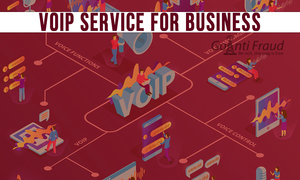
The VoIP Service for Business
Today, communication has reached a significant level. VoIP is the realm of new opportunities where specific clouds in one country and calls can be made in the other. The "cloud" can receive international calls that are charged as local ones. Business is impossible without contemporary communication. Many entrepreneurs do not have time to buy and install their own equipment, so they connect to the VoIP service telephony. Modern means of communication make it possible to create services or connect to the system integration independently, as VoIP communication is much better and cheaper than any other type of communication. VoIP provides, as a rule, only certified traffic and fast income and a turnkey business, which is convenient for businessmen. To do this, many companies have other VoIP firms provide the ready-made service for the organization of the VoIP call on a turnkey basis. This is the so-called online office that provides a lot of benefits for cheap communication, whose main function is to maintain databases, information, keep track of calls and carry out market research. Using cheap VoIP, you can maintain databases, record conversations, serve customers and perform other functions. VoIP service companies provide unique numbers, voicemail, greeting, software, mobile applications, and more. Entrepreneurs can choose the best service that helps make business more functional, providing basic and additional services. When ordering the services, it is important to clarify which services may be included in the subscriber package for customers. There are different amounts and rates to connect devices and install software and functionality. On the other hand, it is possible to continuously explore the services, programs, and news. However, it is important to test the system for free and evaluate how much the service fits. Leading companies usually order the business class traffic. Free testing of VoIP calling before the signing of the agreement is the best option. VoIP-service companies offer a lot of free and virtual numbers for DDI, DID, and 800 without installation, testing, and software. These services are essential for businesses. VoIP service is carried out based on a particular process using pulse code modulators, which transform speech into a specific data set.

VoIP System for Small Business
VOIP - telephony is the 21st - century technology improved from the PBX to a PC connected to the IP that converts sound to certain files. Using the technology that combines a phone, GSM, the Internet, you can easily talk to two subscribers on different continents without interruption of communications and damage to the budget. A phone call is made from abroad to the local station and is transmitted to the number via connections. You have to pay at the rates of the country to which you call. This is a crucial component in the business. That is why more and more companies use the services of VoIP phone systems for small businesses, connecting equipment, or providing services to others. Since the number of those who call abroad inexpensively increases, many firms successfully use such a system. The main opportunity is a connection of additional lines and numbers at low prices to expand and develop office telephony. It all depends on a country, volume, type of funds, the size of an office, and conducted business activity. According to company executives, using the VoIP-telephony makes it possible to save on long trips and expensive calls. The specificity of the VOIP system involves the use of discrete and digital packages, applications, and programs, providing protocols, decoding, and voice transmission. Incoming PSTN phone lines are converted to SIP and VOIP, so you can make cheap calls and hold conferences. To do this, Outlook and CRM are used to connect with people, learn if a subscriber is available, and coordinate based on the address book. There can be a few lines used, so call forwarding, voice mail, and other functions are carried out without any problems. With VoIP, you can always hold conferences of any level, send messages, and maintain a customer database in an automatic mode. Calls and messages are usually received when a person is in another city or country. VoIP for business provides excellent communication to communicate with the right people via Outlook and CRM with just one click. Data on customers will be accessed easily and without problems. Efficient communication involves viewing via the address book, a function of control and supervision of the SMS, voice mail, and so on.

How to Achieve Success Doing GSM Termination
Today the number of people willing to do termination is growing rapidly, since it is possible to call cheaply, regardless of the location of the subscriber. Terminators have begun operating in more countries and making money by installing the equipment . The amount of traffic, tariffs for international/local calls, etc., affect the amount of income. However, the main condition is the availability of excellent high-speed Internet and mobile communications. Otherwise, there can be no high-quality gsm termination. Opening a business in this area can significantly increase your income. According to the terminators, they have earned $1,000 a month already at the beginning via one channel of the equipment. But when they installed gateways equipped with 4, 8, 16, or 32 ports, profit multiplied by the specified amount. And all that they had to do was to find a profitable direction, buy and install a gsm VoIP gateway . On the other hand, not everyone is willing to risk. However, newcomers are often disappointed, as most operators apply a rigorous antifraud. The quick lock of SIM cards and the inability to connect and restart the system revealed by the operator discourage people from doing business in this area. The reason for this is the inexperience and carelessness of beginners when they connecting the system because the operators know how to distinguish a gateway from a living subscriber in the network. They track all users’ actions, using certain parameters of human behavior. If there is a lack of logic in the actions, the number is disconnected. However, there is a solution - an imitation of the behavior of a real subscriber in the network by GoAntiFraud. The latter allows you to coordinate your VoIP system remotely, minimizing risks of locking SIM-cards, and skillfully bypasses the operator antifraud. The terminators using the service note a tenfold increase in profits.

VoIP telephony – a technological innovation for small businesses
Recently, an innovative solution in the telecommunications industry has become VoIP telephony, which allows you to make calls through IP networks connected to GSM networks. In this article, we will focus on the principles of operation of this communication system and consider the advantages of its application. The concept of IP telephony. In VoIP telephony, when a call is made, the voice signal is converted into compressed data packets. Then the traffic is sent over GSM and IP networks. When the subscriber receives this data, it is decoded into the originally sent packets. The stages of this procedure are carried out thanks to auxiliary VoIP protocols, using specialized equipment. One of the most popular brands in the GSM termination market is Hybertone and its product line, GoIP. The range of equipment includes GSM gateways, SIM banks, VoIP adapters, etc. devices for transmitting voice signals from IP to GSM networks. Advantages of using VoIP systems Low cost of calls. This is achieved by using the Internet and reducing the number of intermediaries between subscribers who make calls. This mainly applies to international calls-VoIP telephony can significantly reduce tariffs. Accessibility for all. Today, everyone has access to an Internet connection, so any user can make the connection cheaper. This technology is especially relevant for small companies, call centers, and online stores that need to make a large number of calls every day. The main thing that is necessary for a successful start is the equipment. For example, GoIP gateways will allow you to connect an Internet connection and GSM networks for high-quality communication. No need for mediation with the PBX. Provided that calls are made within the local network, there is no need to use PBX services since you can use an internal server. There is also special software that performs the functions of a PBX, so you do not have to buy expensive equipment for the office. Solving the problem of "busy lines". Modern VoIP systems perform the functions of forwarding and switching to standby mode, which is especially important for small and medium-sized businesses. Thanks to IP telephony, you will not lose a single client. Finally, it is worth noting the improvement in the quality of communication. This advantage is provided by the use of GoIP gateways together with the GoAntiFraud service. This is due to the constant improvement of the technologies used and the provision of a direct data transmission route.
What is the Difference Between VoIP and SIP?
In the enterprise world, practically every technology comes with an avalanche of acronyms. Take telephony for instance. Not many people know what exactly PSTN, PRI, ISDN, VoIP, SIP, etc. mean. Sure, you may have a vague idea that it is used somewhere in the office. But few people have a better idea than that. So it’s not surprising that one of the most commonly asked questions is – what’s the difference between VoIP and SIP? To an industry expert, the difference is glaringly obvious. For an amateur, not so much. It often seems that vendors use them interchangeably but they also refer to different things. Before you decide on a particular system for your business, take a few moments to understand the terms VoIP and SIP. VoIP vs SIP When people ask about the difference between VoIP and SIP, they usually want to know which one to use. What is better for their company? Unfortunately, comparing VoIP and SIP is ineffective. That’s because they’re referring to completely different things. WHAT IS VOIP? VoIP stands for Voice over Internet Protocol. In short, it refers to any technology that allows voice signals to travel over the Internet. It can also be called broadband telephony, Internet telephony, and many other names. It doesn’t matter what technology you use or the hardware and software. Remember that if a voice call travels over the Internet, it can be called VoIP. WHAT IS SIP? SIP stands for Session Initiation Protocol. A protocol is a system of digital rules that allows devices to talk to one another. Think of it as a language for computer hardware. If your computer and modem don’t speak the same language, they cannot communicate. SIP is simply one of many protocols that can be used to implement VoIP. It is used to set up and terminate multimedia sessions, including voice and video. At present, it is the most widely used protocol and is the industry standard. Perhaps when users are trying to figure out what VoIP is, the industry standard of using SIP with VoIP is why many people get confused between the two. SIP is almost ubiquitous in the industry. The Relationship Between VoIP and SIP Now that you know the specifics of what VoIP is and what SIP is, it’s time to understand how they relate to one another. It is similar to the relationship between websites and HTML. A website is a collection of pages that is accessible with a web browser. HTML is one language that you can use to build websites. However, most websites also use other languages such as Java. Similarly, VoIP refers to any method of sending voice calls over the Internet. That means everything from Skype and FaceTime to enterprise phone services fall under the same umbrella. SIP is just one of the many protocols currently in use. So, you can implement VoIP with other protocols as well. For example, Skype does not use SIP. But most enterprise-level phone systems rely on it. In other words, not every VoIP system will use SIP. But the vast majority of VoIP services do utilize it since it is the industry standard. If you have any further questions about what VoIP is or the benefits of using SIP with your VoIP system, contact us and we would be happy to help!

A unique opportunity to open your business for IT workers.
If you have experience and knowledge in the field of IT, and you are reading this article, then it is definitely time for you to change your life and start your own profitable VoIP business in the field of communications. Actually, anyone can start a successful GSM termination business, but if you have experience in the IT field, this is definitely an advantage. As you know, GSM termination is a successfully developing, profitable business in the telecommunications market, which is certainly related to the IT-sphere. We constantly use GSM networks to communicate with each other, and every year the number of such calls becomes more and more, so we can conclude that the business is profitable, in-demand every day, and constantly growing. Therefore, VoIP business in the IT field can become an ambitious and successful business project for you. So, what is needed to successfully launch VoIP GSM termination? Special equipment (GSM gateways, Sim banks) A place with internet and electricity where this equipment can be placed. Sim cards of local GSM operators Time to configure and monitor the system Knowledge of how to set up logic If you work in IT, or already have a business in this area, it's time to think about expanding opportunities and use your experience to start a business in GSM termination, because knowledge in the field of IT will be a big plus. Don't miss your chance. GoAntiFraud offers ready-made packages for starting a business, including equipment, special software, 24/7 technical support. It is easier and faster to start GSM termination and earn with us. Write in chat or leave a request on the website to get advice.